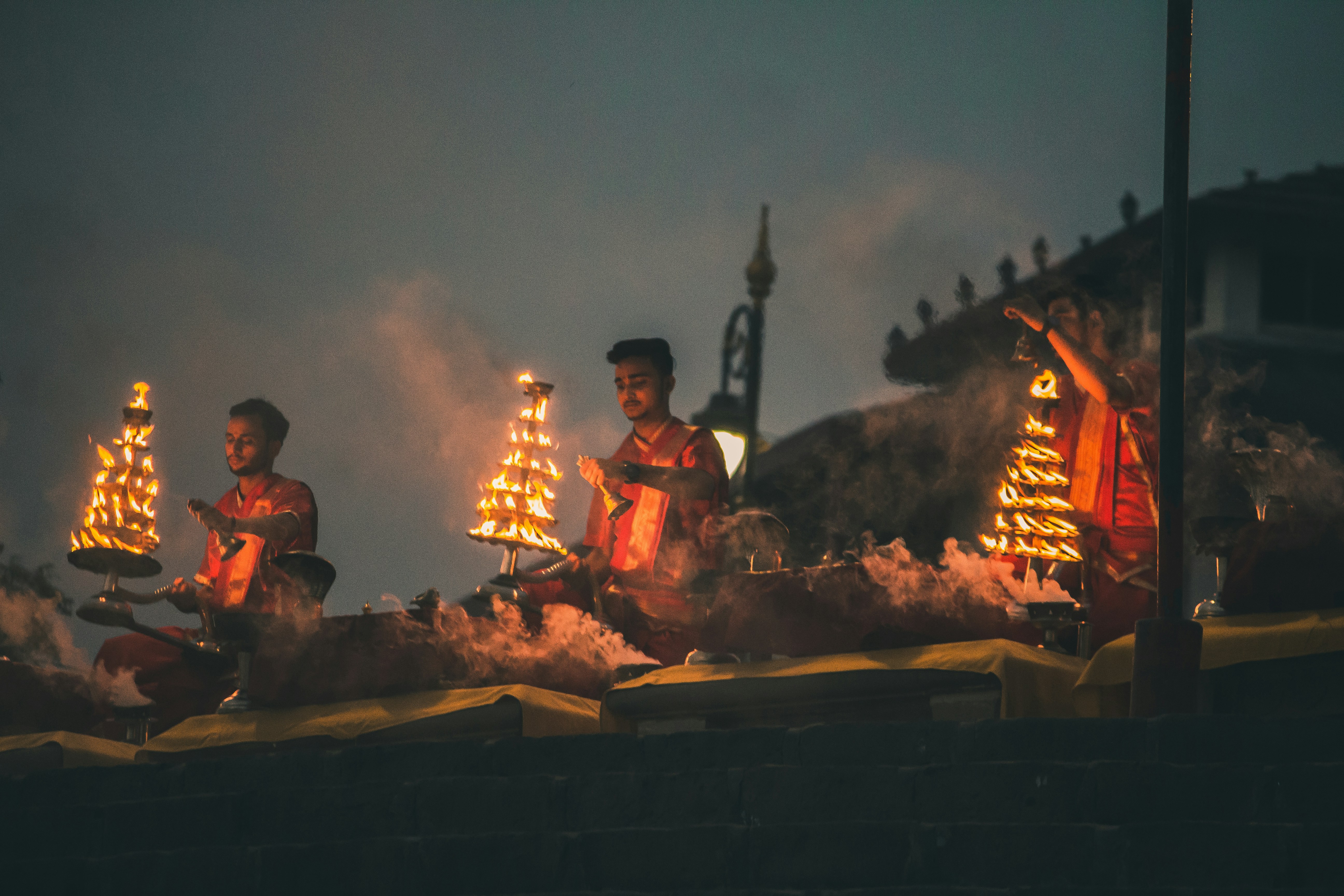
Once a year, about two weeks after Diwali, the ghats of Varanasi light up all over again. This time the lamps are not for the households of the city but for the gods themselves. Dev Deepawali, the Diwali of the gods, turns the long curve of the Ganges into a river of light: more than a million earthen lamps glowing on the stone steps, priests performing a grand aarti, and boats drifting past on dark water. Many travellers who have seen both festivals say this is the more beautiful one.
This guide is for first-time visitors. It explains what the festival actually is, how the day unfolds, where to watch it from, and how to plan the trip without getting swallowed by the crowds.
What Dev Deepawali Actually Is
Dev Deepawali falls on Kartik Purnima, the full-moon night of the Hindu month of Kartik, about two weeks after Diwali. Tradition holds that on this night the gods come down to bathe in the Ganges, and the city lights lamps to welcome them. The festival is also linked to Shiva's victory over the demon Tripurasura, which is why it is sometimes called Tripurotsav.
Although it is marked in many places, nobody celebrates it like Varanasi. The city's eighty-odd ghats, the chain of stone steps that lines the western bank of the river, are cleaned, decorated and lit for the occasion. What began as a ghat-side ritual has grown into one of the largest riverfront celebrations in the country, drawing pilgrims, photographers and travellers from everywhere.
When It Happens and How the Day Unfolds
In 2026, Dev Deepawali falls on Tuesday, 24 November. The main celebration is on the full-moon evening itself, but the city fills up for two or three days around it, with cultural programmes and smaller events in the days before.
The day begins well before sunrise. On Kartik Purnima morning, hundreds of thousands of pilgrims take a holy dip in the Ganges, a ritual known as Kartik Snan, and the ghats are busy from around four in the morning. Through the day, volunteers arrange earthen lamps on the steps in their hundreds of thousands. As dusk falls, the diyas are lit, a special Ganga aarti is performed at Dashashwamedh Ghat by long rows of priests, and the river fills with boats carrying watchers. The lamps burn late into the night, and fireworks usually close the evening.
The Best Ghats and Where to Watch
Dashashwamedh Ghat is the heart of the festival: the main aarti happens here and the crowds are at their thickest. It is the most spectacular place to be and the hardest to reach on the night. Assi Ghat, at the southern end of the ghats, is calmer, with its own aarti and plenty of lamps, and it makes a good base for first-timers. Between the two, the central ghats burn lamps in their own way, and a slow walk along the steps in the early evening, before the biggest crowds arrive, is one of the best ways to take it all in.
Two cautions are worth knowing. The lanes leading to the central ghats are closed to vehicles and packed with people from the afternoon onwards, so expect to walk the last stretch. And the rooftop views offered from buildings above the ghats vary widely in quality, so check exactly what you are paying for before you agree.
Seeing the Festival from the River
The classic Dev Deepawali view is from the water. As the lamps come on, the whole sweep of the ghats glows in one unbroken line, and from a boat you see it the way the photographs promise. Shared and private boats both run on the festival evening, rowed slowly along the ghats after dark.
Boats sell out well in advance for that evening, so arrange yours as early as you can, ideally through your hotel or a boatman you have met in person. Agree the price, the duration and the boarding point before you pay, and be clear about which ghat you will return to. Life jackets are not always offered, so ask for one, especially if you are travelling with children.
Getting There and Where to Stay
Varanasi is well connected. Lal Bahadur Shastri Airport has flights from Delhi, Mumbai and other major cities, and the city's railway stations link it to the wider network, making the overnight train from Delhi or Kolkata a comfortable way to arrive. From the airport or the station, a taxi to the old city takes under an hour in normal traffic.
Stay as close to the ghats as you can manage, because on the festival days you will do almost everything on foot. The Assi area suits travellers who want calmer evenings and good cafes, while the lanes around Dashashwamedh put you in the middle of everything at the cost of noise and crowds. Book well ahead: riverside rooms for the festival week are among the first to sell out anywhere in India.
Surviving the Crowds: Practical Tips
Dev Deepawali draws one of the largest gatherings of the year in Varanasi, and a little planning changes the experience completely.
Arrive at least a day or two before the full moon. The run-up days are festive and busy but manageable, and you can scout your ghat and your boat in daylight. On the evening itself, carry only what you need: a phone, some cash, a power bank and water. Agree a meeting point with your group in advance, because phone networks can slow to a crawl in the densest crowds. Wear shoes you can walk in for hours, and carry a light layer, since November nights on the river are cooler than the days suggest. Finally, give the lamps their due respect: the ghats are a place of worship first and a spectacle second.
Making the Most of the Rest of the Trip
The festival may be the reason to come, but Varanasi rewards a longer stay. Watch the regular evening aarti on a quieter night, take a dawn boat ride when the ghats belong to the pilgrims, and lose a morning in the lanes of the old city with its sweets, silk and chai stalls. The Kashi Vishwanath corridor and the Buddhist site of Sarnath, a short drive away, round out the story of one of the oldest living cities in the world.
Dev Deepawali is one of those rare events that looks exactly like the photographs and still manages to surprise you. Plan early, pack light, and let the river do the rest.

Photos: Aditya Prakash via Unsplash (cover); Tanusree Mitra via Unsplash.
Follow Madfun Adventures on Instagram for more travel ideas: https://www.instagram.com/madfun.india/